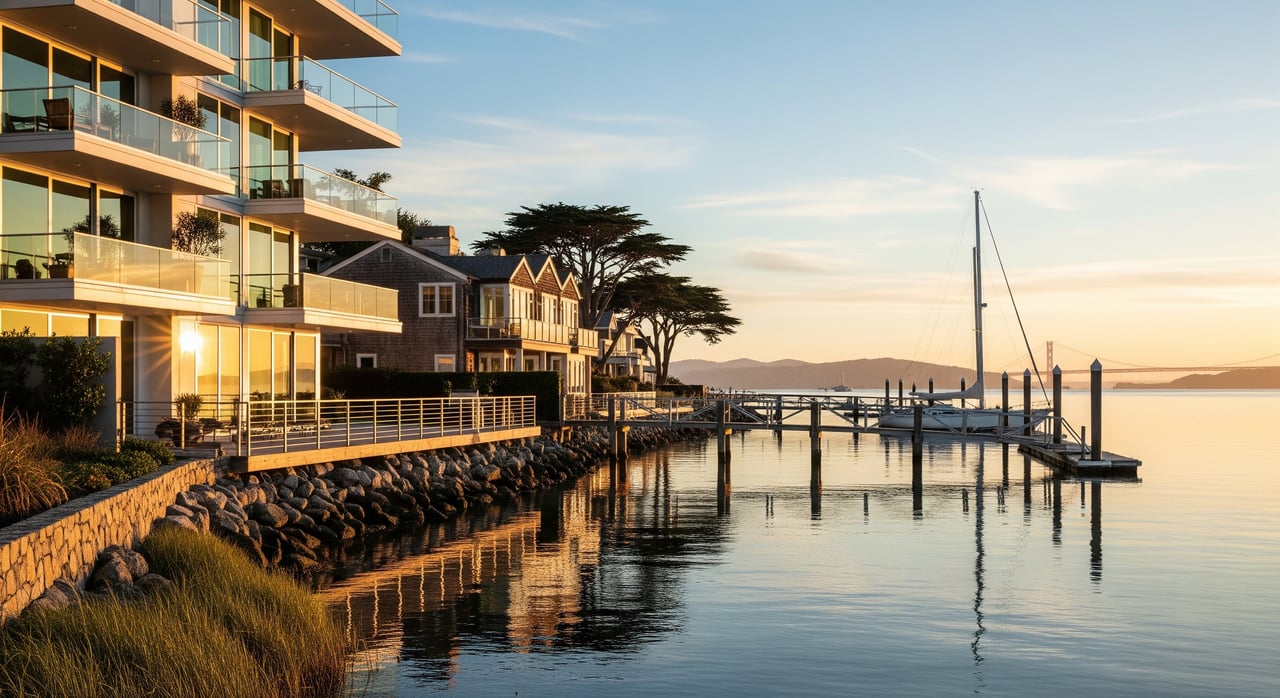
Picture your mornings on Richardson Bay, coffee in hand, with sailboats drifting by. If you are choosing between a Sausalito waterfront condo and a single-family home, you are weighing more than a floor plan. You are deciding how much control you want, how you feel about shared rules, and what level of maintenance fits your life. In this guide, you will learn the key differences, what to check in an HOA, how shoreline permits work, and how to assess long-term value and risk in Sausalito. Let’s dive in.
Key differences at a glance
Ownership model
- Condo: You own the interior of your unit. The HOA typically owns and maintains common areas like the exterior, roof, and shared walkways or piers.
- Single-family: You own the land, structure, and usually any private shoreline features. You handle all maintenance unless an agreement says otherwise.
Daily responsibilities
- Condo: Fewer chores. The HOA manages exterior maintenance, landscaping, and common utilities. You follow HOA rules, pay dues, and may face special assessments.
- Single-family: You manage repairs, landscaping, and shoreline work and permitting. You get full control, with higher time and capital demands.
Lifestyle and privacy
- Condo: Lower maintenance and a lock-and-leave feel. Expect less privacy and shared walls, with communal amenities in some developments.
- Single-family: More privacy, customization, and direct shoreline access. More upkeep and larger projects fall on you.
Cost drivers
- Condo: Monthly HOA dues and the risk of special assessments for shared assets like seawalls or bulkheads.
- Single-family: No HOA dues, but you bear higher individual costs for docks, pilings, seawalls, slope stability, and utilities.
HOA essentials for Sausalito condos
Condo living depends on the HOA’s health and rules. In California, common interest developments follow the Davis-Stirling Common Interest Development Act. Before you write an offer, request a full HOA packet and review it closely.
Core documents to review
- CC&Rs, bylaws, and community rules and regulations
- Current budget and recent financial statements
- The reserve study showing funding for major capital repairs
- Recent meeting minutes to spot projects, assessments, or litigation
- Master insurance policy details and coverage limits
- The declaration of common vs exclusive-use elements, including balconies, decks, and pilings
Financial health indicators
- Reserve funded percentage and whether past reserves met projected needs
- History of special assessments and trends in monthly dues
- Dues delinquency rates and any pending litigation
Insurance and liability
- Confirm what the master policy covers, including any shoreline structures. Know where your HO-6 policy must fill gaps.
- Ask about deductibles and responsibility for interior damage from building system failures.
Governance and lifestyle
- Review rules on pets, rentals or short-term rentals, exterior changes, and boat or dock use and storage.
Tip: Healthy reserves, transparent minutes, and clear insurance coverage help lower the risk of a surprise assessment.
Waterfront permits and shoreline structures
Waterfront ownership in Sausalito includes added layers of permits and oversight. Several agencies may have a say in repairs, upgrades, or additions near the Bay.
Typical regulatory players
- San Francisco Bay Conservation and Development Commission (BCDC)
- U.S. Army Corps of Engineers (USACE)
- City of Sausalito and Marin County planning and building departments
- California Coastal Commission if the coastal zone applies
- California State Lands Commission for state tidelands leases or permits
Common shoreline elements
- Bulkheads and seawalls may be aging and costly to replace. Confirm who maintains them.
- Docks, piers, floats, and pilings can be private or shared. Ownership and maintenance duties vary by property and HOA.
- Public trust or tideland issues can affect exclusive use and access rights.
Practical steps for buyers
- Confirm who owns and maintains any dock, float, pier, or bulkhead.
- Ask about permits that may be expiring or due for renewal, plus any ongoing monitoring.
- Budget for geotechnical and biological studies if you plan changes. Permits can be complex and costly.
Flood risk, sea level rise, and insurance
Sausalito’s shoreline is beautiful and dynamic. Flooding and sea level rise deserve early attention, along with insurance availability.
Flood maps and elevation
- Many waterfront properties sit in FEMA Special Flood Hazard Areas. Lenders often require flood insurance for these zones.
- Base flood elevation affects building requirements and flood insurance premiums. An elevation certificate can clarify your rating.
Sea level rise
- Projections for the Bay suggest more frequent tidal flooding and higher storm surge over time. Local and regional planning efforts continue to evolve.
Insurance landscape
- Flood insurance is separate from homeowners coverage and is available through the NFIP or private carriers. Pricing and availability vary.
- Earthquake insurance is a separate product and can be important for older pier or piling structures.
- Some carriers limit coverage or raise deductibles in coastal zones. Factor insurance stability into your decision.
Value implications
- Consider current flood risk and long-term exposure, not just today’s premium. Mitigation options like raising a structure or upgrading seawalls can be costly and regulated.
Financing and resale dynamics
Financing rules and resale patterns can differ between condos and single-family waterfront homes.
Financing
- Lenders evaluate flood risk and may require flood insurance if the property is in a designated flood zone.
- Condos face additional project-level reviews, including documentation and financial thresholds. Some loan programs need specific condo approvals.
Property taxes
- Marin County property taxes follow California rules. Expect reassessment at sale and consult the Assessor for specifics.
Resale trends
- Waterfront homes often command premiums for views and access. Buyer pools can be narrower due to price, risk, and insurance costs.
- Condos can offer more liquidity at lower price points, but strict rules or weak HOA finances may affect resale.
- Single-family homes with strong privacy and exclusive shoreline features can be prized, while expensive seawall or piling needs can weigh on value.
Short-term rentals
- Local rules impact rental potential. Confirm restrictions early if income is part of your plan.
Value framework: condo vs single-family
Condo value lens
- Reserve strength and history of special assessments
- Coverage details for shoreline structures under the master policy
- Unit elevation and flood rating relative to base flood elevation
- Condition and permits of shared docks, floats, and bulkheads
- Rental and pet rules that affect use and resale
- The project’s dues delinquency rate and any active litigation
Single-family value lens
- Elevation, bulkhead condition, utility resilience, and groundwater intrusion
- Known regulatory constraints that could limit future upgrades
- Insurance availability and likely premium trajectory for flood and earthquake
- Direct shoreline usability, access rights, and any public trust encumbrances
- Market comparables for similar Sausalito waterfront homes
- Flexibility to adapt the property with allowed mitigation measures
Cost planning: what to budget
For condos
- Monthly HOA dues and potential special assessments
- HO-6 policy coverage aligned with the master policy
- Share of major common repairs, such as seawall or piling work
For single-family homes
- Routine exterior, landscape, and shoreline maintenance
- Capital projects like bulkhead replacement or pier repairs
- Permitting, engineering, and environmental studies for shoreline work
For both
- Flood and earthquake insurance premiums
- Inspections, elevation certificates, and specialized reports
- Contingency reserve for unexpected repairs
Due diligence checklist for Sausalito buyers
Documents
- Seller disclosures and the California Natural Hazard Disclosure
- Preliminary title report and recorded easements, including tideland or public trust notes
- Survey or ALTA with mean tide lines if available
- Flood zone determination and any Letters of Map Change
- For condos: CC&Rs, bylaws, rules, budgets, reserve studies, minutes, and insurance certificates
- For single-family: written proof of ownership and maintenance duties for seawalls, docks, pilings, and shared facilities
- Permits and repair records for shoreline structures
- Insurance claims history and current policy details
Inspections and reports
- General home inspection
- Structural review of pilings, floats, seawalls, and piers
- Geotechnical report for slope or settlement concerns
- Elevation certificate for insurance and lending
- Environmental or biological review for planned shoreline work
Other steps
- Scan HOA minutes for shoreline or capital project discussions
- Confirm local short-term rental rules if relevant
- Speak with City of Sausalito and Marin County staff about constraints and upcoming shoreline projects
- Obtain quotes from insurance brokers familiar with Marin coastal properties
Which lifestyle fits you
Choose a condo if you want a low-maintenance, lock-and-leave lifestyle and are comfortable with rules and shared decision-making. This can be a strong fit if you value simplicity and community maintenance of major shoreline assets.
Choose a single-family home if you want privacy, direct control over upgrades, and exclusive shoreline access. This fits buyers ready to manage larger projects and long-term maintenance.
Next steps toward the water
- Engage a Sausalito waterfront agent with local experience.
- Order a flood zone determination and elevation certificate.
- For condos, request the full HOA packet; for single-family, gather shoreline ownership and maintenance documents.
- Hire inspectors who understand marine structures and geotechnical issues.
- Consult a coastal permitting specialist or attorney for easements, public trust, and permit pathways.
- Obtain flood, homeowners, and earthquake insurance quotes and compare NFIP vs private options.
- Model possible special assessments or capital projects in your budget.
- Secure lender preapproval that factors potential insurance requirements.
Ready to walk the waterfront with a clear plan? Connect with a local advisor who can source on and off-market options and guide you through the details from HOA reserves to bulkhead permits. To explore the right Sausalito fit for you, reach out to Sherry Ramzi. Book an Appointment.
FAQs
What does a Sausalito condo HOA typically cover on the waterfront?
- Most HOAs maintain exteriors, roofs, and common areas like shared walkways or piers, while unit owners cover the interior. Always confirm exact boundaries and master policy coverage.
How do flood zones affect Sausalito waterfront financing?
- If a property is in a FEMA Special Flood Hazard Area, lenders often require flood insurance. Rates and eligibility can depend on elevation certificates and building details.
Who maintains docks, pilings, and seawalls for single-family homes?
- In most cases the owner maintains private shoreline structures, unless a recorded agreement or easement says otherwise. Verify responsibilities in title documents and permits.
What should I look for in a condo reserve study?
- Check the reserve funded percentage, upcoming capital projects, and whether shoreline structures like seawalls or pilings are included. Strong reserves reduce special assessment risk.
Are short-term rentals allowed for Sausalito waterfront properties?
- Rules vary by building and local regulations. Review HOA rental policies and confirm municipal requirements before assuming rental income.
How does sea level rise impact long-term value in Sausalito?
- More frequent tidal flooding and higher storm surge can affect insurability, upkeep costs, and permitted upgrades. Weigh both current risk and a 20 to 50-year planning horizon.