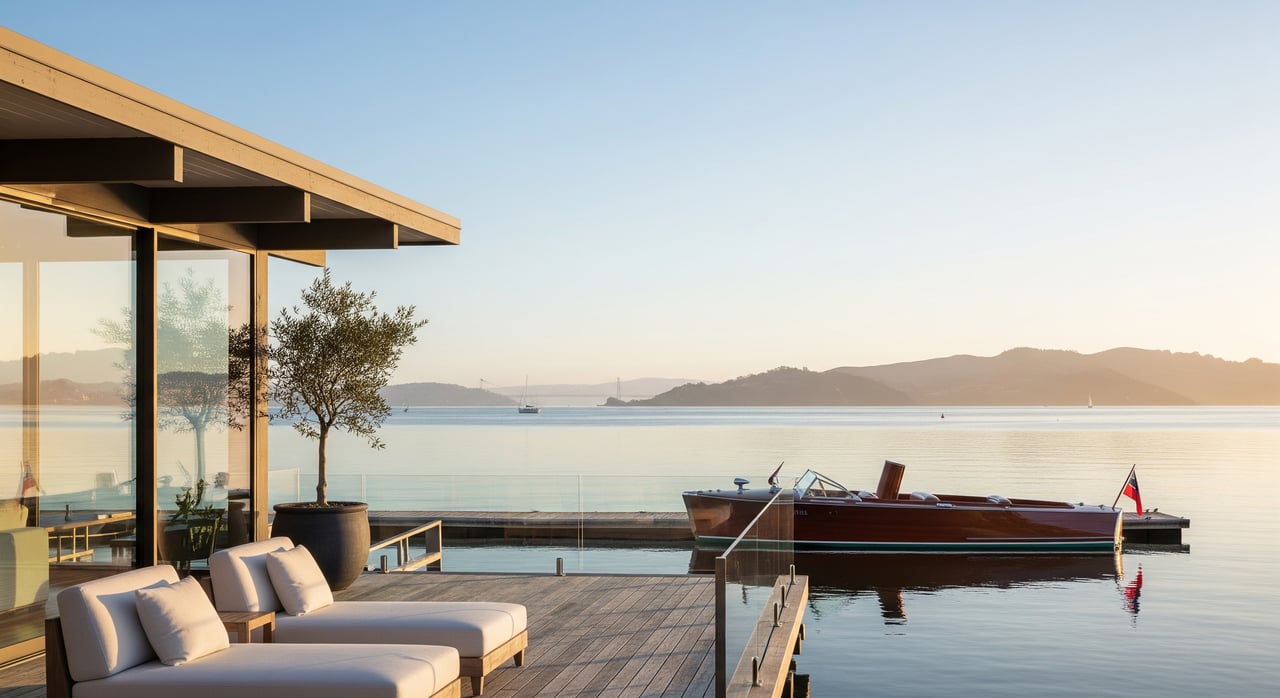
Is your San Francisco commute shaping where you live next? If Tiburon is on your shortlist, you probably love the idea of a peaceful waterfront base with quick access to the city. You also want real timing, costs, and practical pros and cons before you commit. In this guide, you’ll learn how the ferry compares to driving, what door‑to‑door really looks like from different parts of the Tiburon peninsula, and who tends to thrive here. Let’s dive in.
The short answer
Tiburon can be an excellent home base if your schedule matches the Golden Gate Ferry and your office is near the Ferry Building or the Financial District. The ferry crossing is typically about 25–30 minutes on the water, and weekday sailings cluster around peak hours rather than running all day at high frequency. If you plan to drive, off‑peak trips can be about 30–45 minutes, but tolls and congestion add cost and variability. A hybrid schedule often tips the scales in Tiburon’s favor, while daily Peninsula commutes usually feel too complex.
Commute modes at a glance
Golden Gate Ferry: timing and schedule
Golden Gate Ferry runs direct Tiburon–San Francisco service with a weekday timetable focused on morning and afternoon peaks. Before you plan your day, check the operator’s current service notices and Tiburon timetable on the Golden Gate Ferry updates page, since departures and frequency can change with schedule updates. The on‑water crossing to the Ferry Building typically takes about 25–30 minutes, which many commuters find low‑stress and productive compared with highway traffic. If your hours are inflexible and fall outside peak windows, the limited mid‑day and late‑evening sailings can be a constraint. Review the latest schedule and service notices.
Ferry fares, payment, and bikes
Clipper (card or mobile) and contactless bank cards are accepted on Golden Gate Ferry, and those fares are generally lower than paper tickets. Bikes and many e‑bikes are allowed on a first‑come basis, with capacity varying by vessel. If cycling is part of your plan, confirm capacity and terminal bike parking before you rely on it daily. You can find current fare details, payment options, and bike guidelines on the operator’s site. See Golden Gate Ferry fares and payment and bike rules and capacity.
First mile in Tiburon: parking and drop‑offs
Living near Main Street puts you within a short walk of the terminal, which is a major advantage for ferry users. If you plan to drive and park near the terminal, know that downtown Tiburon parking is limited and can fill quickly, especially on event days and weekends. Local guides point to small public lots and limited street parking near Ark Row and by the Bank of America lot, but daily reliability varies. Test a typical weekday morning to see how early you need to arrive. Review local parking context.
Last mile in San Francisco
The Ferry Building sits on the Embarcadero, within walking distance of many Financial District offices. For jobs farther inland or south of Market, plan added time for Muni, BART, or a walk. Transfers are simple for downtown roles, but longer for SoMa, Mid‑Market, or any South Bay connection. If your office is near the Ferry Building, the ferry often wins on comfort and predictability. Check current Golden Gate Ferry notices for context.
Driving over the Golden Gate
Typical times and variability
Driving from Tiburon to central San Francisco via US‑101 and the Golden Gate Bridge is roughly 17 miles and commonly estimated around 30–40 minutes in typical traffic. Peak periods, collisions, or bridge backups can stretch that significantly, so build in buffer if you need punctual arrivals. Your door‑to‑door time also depends on intra‑city traffic and parking near your office. See a representative driving time estimate.
Tolls and monthly math
Southbound Golden Gate Bridge tolls apply into San Francisco only. As of the schedule effective July 1, 2025, FasTrak is listed at $9.75, pay‑by‑plate at $10.00, invoice at $10.75, and a discounted carpool FasTrak rate at $7.75 under qualifying rules. If you drive most days, multiply the toll by your commute days and add parking to get a realistic monthly budget. Always confirm current rates on the operator’s site. Review Golden Gate Bridge tolls and payment.
Neighborhood fit on the Tiburon peninsula
Downtown/Main Street proximity
If you live a short walk from the Tiburon Ferry Terminal, your first mile is easy. That can shave 10–20 minutes off your door‑to‑door trip compared with driving and parking before boarding. Homes near Main Street usually make a ferry‑centric routine feel seamless.
Belvedere and hill homes
Belvedere and hillside sections offer stunning outlooks and privacy, but they add access time to the terminal. Expect about 5–15 extra minutes for the first mile, depending on the street, parking, and traffic at drop‑off. If you plan to ferry most days, test your actual walk or drive at your target times before you commit.
Strawberry and Paradise Cay
Strawberry and Paradise Cay can be a good value for space and marina access, and they pair with short hops to the Tiburon terminal. Marin Transit’s local route network, including Route 219, connects Tiburon Ferry with Strawberry and neighborhood stops, which can make a timed first‑mile work. Check live trip planners to verify sync with your preferred sailings. Explore Marin Transit routes.
Door‑to‑door: what to really expect
For a ferry‑centric commute, plan about 45–80 minutes door‑to‑door to downtown San Francisco. That range includes your first mile to the terminal, boarding and the crossing, and your last‑mile walk to the office. If you live within a short walk of the terminal, you will often be closer to the 45–55 minute end of the range. If you drive and park near the terminal or transfer on the San Francisco side, plan toward the longer end.
If you drive the entire way, typical conditions can be 30–45 minutes to central San Francisco, but the spread grows during peak windows. One incident on US‑101 or the bridge can add significant time, especially as many commuters continue to favor driving. A scheduled ferry can feel more predictable, while driving offers door‑to‑door control.
How hybrid schedules change the calculus
Hybrid work is common across the Bay Area, with many teams balancing partial return‑to‑office trends. If you commute two or three days a week, Tiburon’s lifestyle often outweighs the added time on your in‑office days. If you must be onsite five days a week with strict start and end times, you will lean more on driving or need close alignment with ferry departures. See regional return‑to‑office context.
Who Tiburon suits best
- You want a calm, scenic commute and can match your hours to the Tiburon ferry timetable.
- Your office is near the Ferry Building or the Financial District, which minimizes last‑mile time.
- You plan a hybrid schedule and value space, views, and waterfront access on your off days.
- You can tolerate variable drive times if you mix driving and ferrying as needed.
Who it may not suit
- You work daily in the Peninsula or South Bay. The required transfers (ferry plus Muni/BART to Caltrain) usually make Tiburon‑to‑Peninsula trips slow for five‑day routines.
- Your hours do not align with peak ferry windows and you need precise arrival times every day.
- You want to avoid recurring toll costs and bridge congestion entirely.
A quick look at local commute stats
Tiburon’s mean travel time to work is about 28.5 minutes, based on the U.S. Census 2019–2023 five‑year estimate. This figure blends all destinations and modes, so your personal time may be higher or lower depending on where you work and how you travel. A notable share of Tiburon residents use ferries relative to most U.S. towns, which highlights that the service is a real, daily option here. Use the averages as context, then test your own route. See the Census QuickFacts and an ACS‑based ferry‑usage listing.
Try before you buy: a 5‑step checklist
- Do two trial commutes on a weekday at your actual times. Try both ferry and driving, door‑to‑door, and write down the minutes for each leg. Check the current ferry timetable.
- Test terminal parking for a full week if you plan to drive to the ferry. Note how early you must arrive to find a spot and any permit or paid lot rules. Review local parking context.
- Price your monthly commute cost: ferry fares or bridge tolls multiplied by days in office, plus any parking. Clipper or contactless can be cheaper than paper tickets. See fares and payment and current bridge tolls.
- If you plan to bring a bike, confirm capacity on your typical sailings and parking on both ends before relying on it daily. Check bike policies.
- If you will use local transit for the first mile, confirm Marin Transit timing and reliability for your route. Explore Marin Transit.
Bottom line
Tiburon works best when you can lean on the ferry for a comfortable, scenic ride into the Embarcadero or keep a flexible driving routine for days that do not fit the timetable. Proximity to the terminal matters, as do your exact office location and schedule. If you plan a hybrid week and want the Marin lifestyle, Tiburon can be a smart, satisfying fit.
If you are weighing specific neighborhoods or want to test door‑to‑door options before you decide, let’s make a custom plan. Reach out to Sherry Ramzi to explore homes near your best commute and to access both on‑ and off‑market opportunities.
FAQs
How long does the Tiburon ferry take door to door to the Financial District?
- Plan about 45–80 minutes total, including your first mile to the terminal, about 25–30 minutes on the water, and a 5–20 minute last‑mile walk to your office near the Embarcadero. Check current ferry notices.
What are the current Golden Gate Bridge tolls for southbound commuters?
- As listed for July 1, 2025, FasTrak is $9.75, pay‑by‑plate $10.00, invoice $10.75, and discounted carpool FasTrak $7.75 under qualifying rules; confirm rates before you plan. See tolls and payment.
Is there reliable parking near the Tiburon ferry terminal on weekdays?
- Parking exists in small public lots and limited street spaces near downtown, but it can fill early; test a weekday morning to learn your timing. Review local parking context.
Does the Tiburon ferry accept bikes and e‑bikes?
- Yes, Golden Gate Ferry allows bikes and many e‑bikes on a first‑come basis, with capacity varying by vessel; confirm space on your regular sailings. Check bike policy.
Is Tiburon practical if I work daily in Palo Alto or Menlo Park?
- Daily Peninsula commutes are usually impractical from Tiburon because they require multiple transfers (ferry plus Muni/BART to Caltrain) or long drives; Tiburon fits better if your job is in San Francisco or you work hybrid.
What is the average commute time for Tiburon residents?
- The U.S. Census estimates a mean travel time of about 28.5 minutes for Tiburon residents, which blends all modes and destinations; use it as context and test your exact route. See Census QuickFacts.